
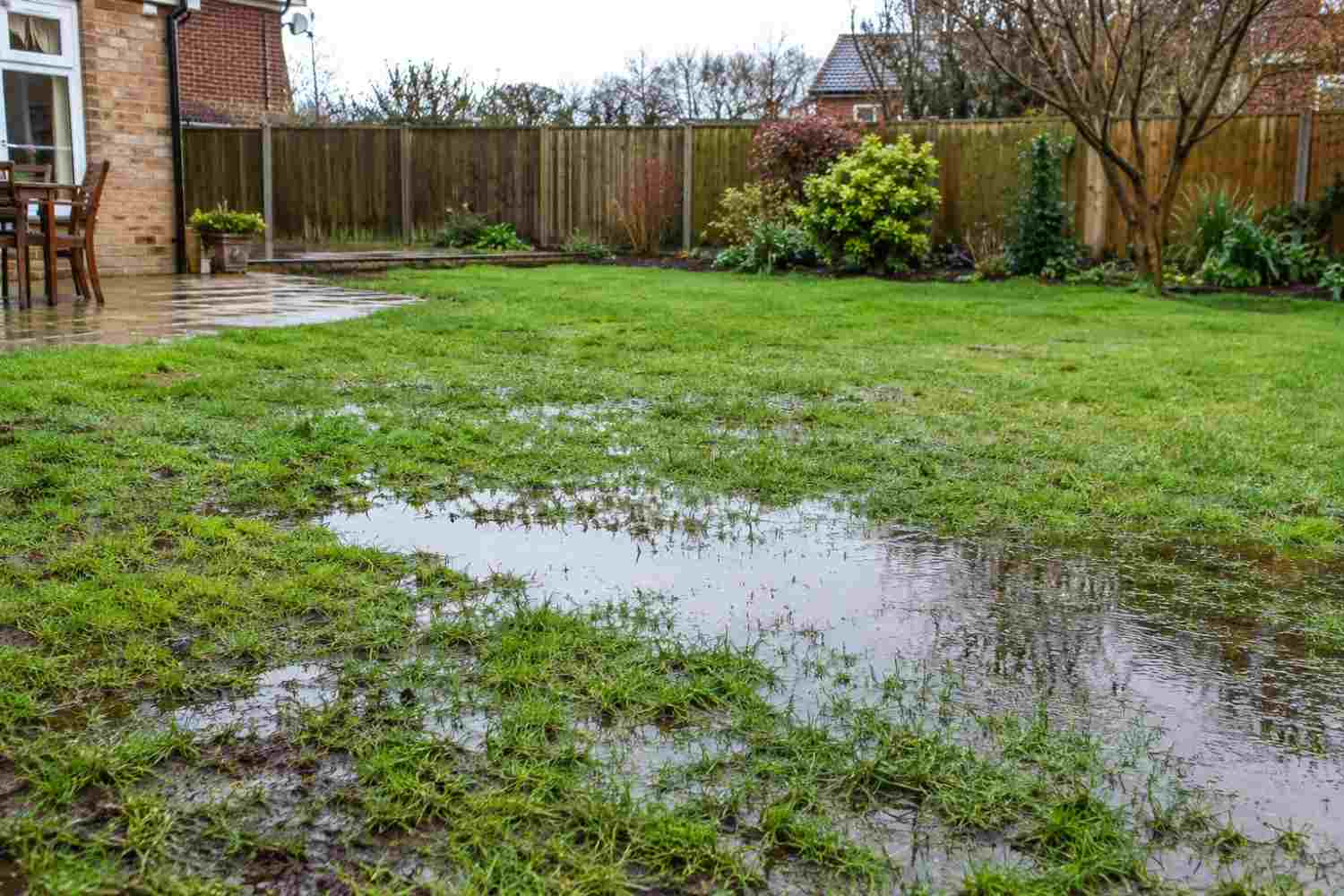
To fix a waterlogged garden in the UK, identify the cause first, such as heavy clay soil, compacted ground, poor garden levels or excessive surface run-off. Aerate compacted lawns, improve soil structure and manage rainwater where appropriate. For persistent problems, consider a professionally designed drainage system suited to the property’s soil, groundwater conditions and a suitable water outlet. Regular maintenance helps prevent recurring waterlogging.
A waterlogged garden is one where the soil stays saturated for far longer than it should, leaving water sitting on or just beneath the surface instead of draining away. The tell-tale signs include a lawn that stays spongy and squelchy well after the rain has stopped, standing water in low spots that doesn’t disappear within a day or two, moss spreading across the grass, and borders where plants start to yellow or rot at the roots.
It helps to separate two different situations. After heavy rain, most gardens hold some surface water for a few hours, and that’s entirely normal; soil simply needs time to absorb what has fallen. Persistent waterlogging is different: water that’s still visible two or three days after the rain has stopped, ground that stays wet through an entire week of dry weather, or a lawn that’s permanently soft from autumn through to spring. That kind of ongoing saturation usually points to a structural problem with the soil, the levels, or the drainage rather than simply a heavy downpour.
Several factors tend to be behind a waterlogged garden, and more often than not it’s a combination rather than a single cause.
Before reaching for a spade, it’s worth spending twenty minutes working out where the problem actually lies.
Doing this before choosing a fix avoids wasting a weekend on aeration when the real issue is a collapsed land drain, or vice versa.
Once the likely cause is clear, the right drainage solution usually becomes obvious. The options below range from straightforward weekend jobs to installations that are best left to someone experienced, and which one applies depends entirely on what’s actually causing the waterlogging.
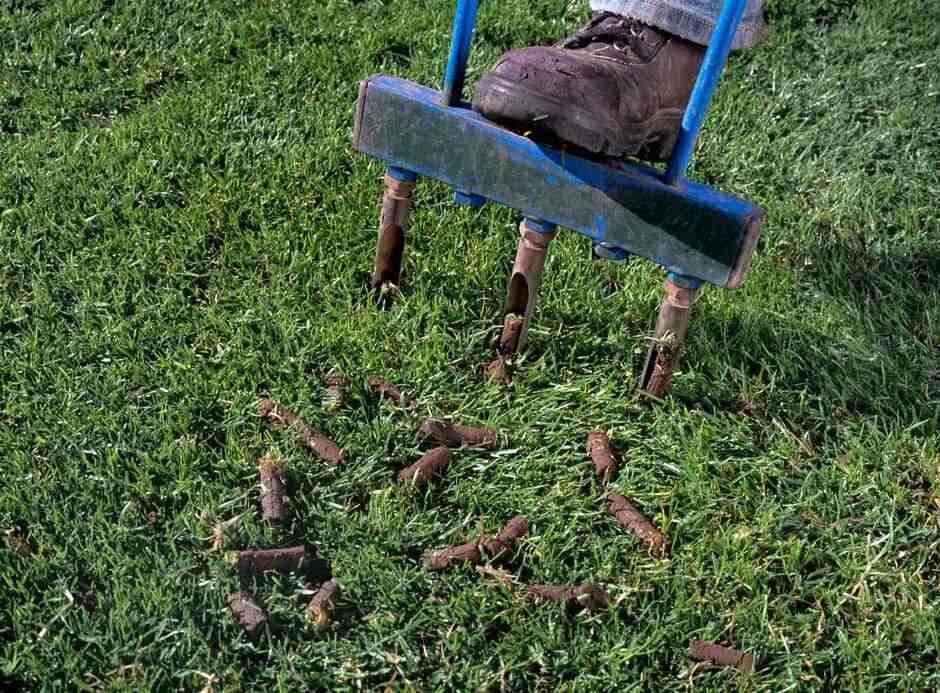
Spiking or hollow-tine aerating the lawn opens up channels in compacted soil, letting air and water move through more freely. It works well where compaction from mowing, foot traffic, or football games is the main issue, typically carried out in autumn when the ground is workable. On its own, though, aeration won’t resolve heavy clay drainage or a high water table; it simply gives water a slightly easier path through the top few centimetres of soil.
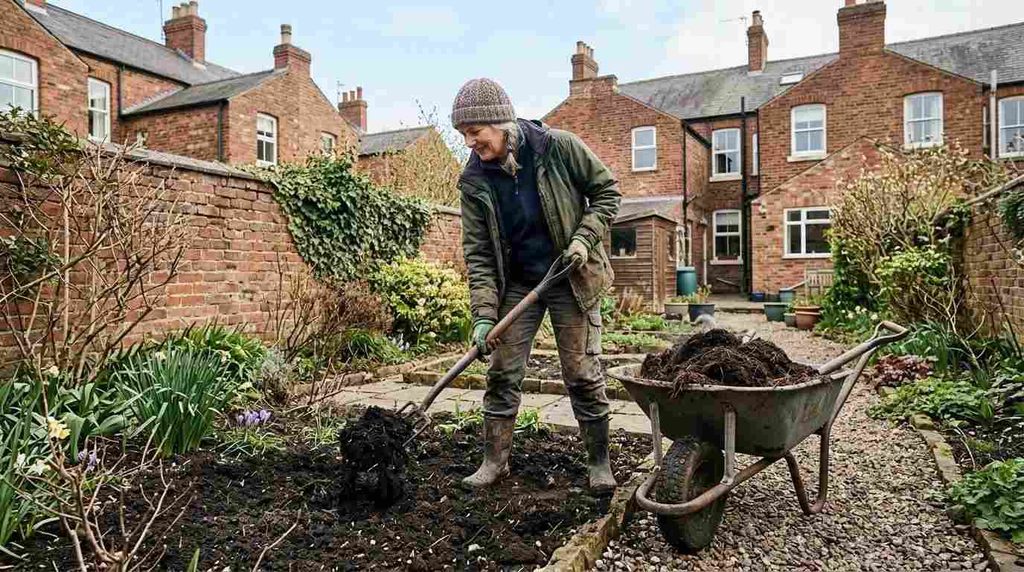
Working well-rotted organic matter, such as garden compost, into borders and lawns over a season or two gradually improves how clay soil drains, by opening up its structure and encouraging worm activity. This is a slow process rather than a quick fix, and it works best alongside aeration rather than instead of it.
Applying a sandy top-dressing mix after aeration, repeated over a few seasons, gradually improves surface drainage on a lawn. It’s worth doing properly or not at all: a thin, occasional dressing makes little difference, while a mix that’s wrong for the existing soil can sit on top rather than blending in.
Sometimes the simplest fix is regrading, building up a low corner with topsoil, or creating a shallow channel that encourages surface water to flow away from the house and towards a border, lawn edge, or soakaway rather than pooling in the middle of the garden.
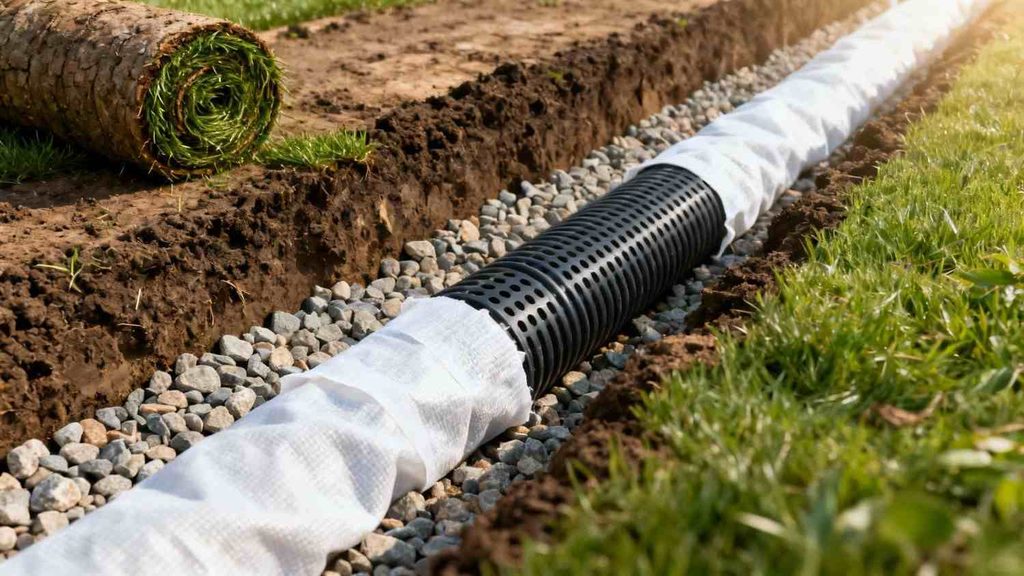
A French drain, a gravel-filled trench with a perforated pipe running through it, is one of the most effective garden drainage systems for a persistently wet area, since it collects water below the surface and carries it to somewhere it can disperse. It needs somewhere sensible to discharge to, whether that’s a soakaway, a ditch, or a surface water drain, and getting the fall and pipe size right matters more than it might seem.
A rain garden or soakaway can work well where the soil underneath drains reasonably freely, but neither is suitable everywhere. Infiltration capacity, how close the groundwater sits, proximity to the house and any outbuildings, and nearby underground services all need checking first, and any installation needs to meet the relevant building regulations and local drainage requirements. Where the ground barely drains at all, a soakaway on its own won’t solve the problem.
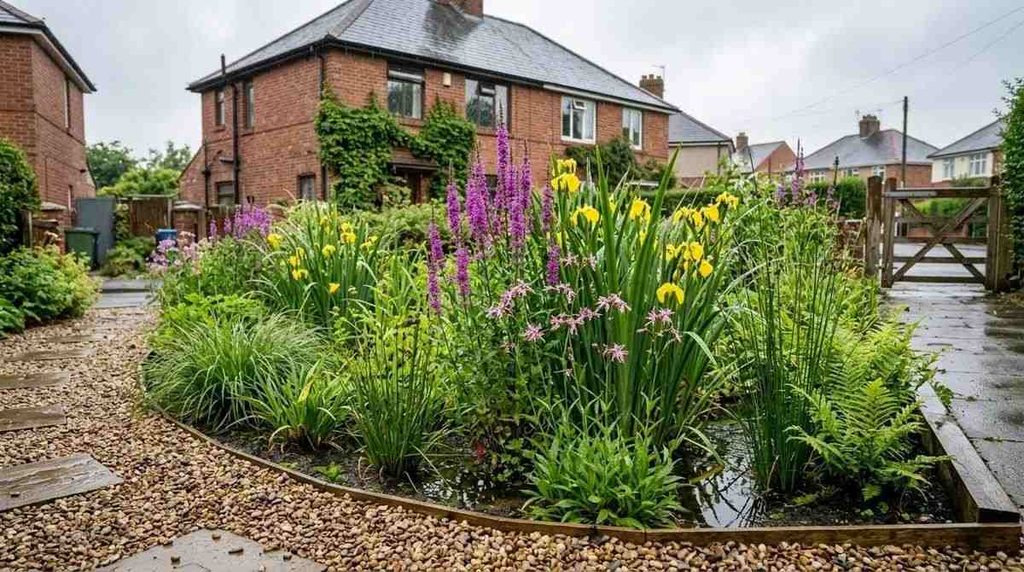
Diverting a downpipe into a water butt or a dedicated soakaway, rather than letting it discharge straight onto the lawn, can make a noticeable difference. Whatever route the water takes, it should never be directed onto a neighbour’s property or a public pavement, both because it isn’t fair on whoever’s land it ends up on and because it can cause genuine damage or a nuisance claim.
Where drainage improvements alone won’t be practical or affordable, choosing plants that tolerate damp soil, such as moisture-loving perennials and certain ornamental grasses, is a realistic way to make a wet border work rather than fight it.
Not every waterlogged garden can be sorted with a weekend of aeration and improved soil. Professional assessment tends to make the most sense once water is standing for days at a time, the lawn turns to mud every time it rains, DIY measures haven’t made any real difference, or water is flowing towards the house, a patio, or another vulnerable spot.
A proper assessment starts with identifying what’s actually causing the saturation, whether that’s clay soil, a high water table, poor levels, or a drainage system that’s failed or was never adequate, rather than assuming which solution to reach for. From there, a suitably designed system, whether that’s a French drain network, regraded levels, a soakaway sized correctly for the site, or a combination of approaches, can be installed with proper fall and discharge points, which matters more to whether it actually works than almost anything else. Companies offering professional garden drainage services, such as Ideal Works and Services, work through this kind of diagnosis and installation process, aiming for a solution suited to the specific property rather than a generic fix.
Where the cause is unclear, or where previous attempts have failed to make a lasting difference, getting a professional opinion before spending more money on trial and error is usually the sensible route.
A few mistakes come up again and again when people try to tackle a waterlogged garden themselves.
A bit of regular maintenance goes a long way towards keeping a garden from waterlogging again once it’s been sorted out.
A few signs make it fairly clear that DIY measures alone won’t be enough. Standing water that’s still there several days after rain has stopped, a lawn that’s unusable for weeks at a time through autumn and winter, or water that’s visibly heading towards the house or a patio all warrant a proper look, ideally sooner rather than later.
Getting the diagnosis right matters more than almost any other part of the process. A garden with complicated levels, more than one contributing cause, or a water table close to the surface can easily end up with the wrong fix applied, which wastes time and money without solving anything. A professional assessment identifies what’s actually happening below the surface before any digging starts, which is usually the difference between a drainage solution that lasts and one that needs doing again in a couple of years.
Fixing a waterlogged garden comes down to working out what’s actually causing the water to sit, rather than guessing at a solution. For some gardens, that means aerating a compacted lawn or improving the soil over a season or two. For others, particularly those on heavy clay, with poor levels, or a drainage system that’s never worked properly, a French drain, regraded levels, or a correctly sized soakaway will make a far bigger difference.
If the cause isn’t obvious, or previous attempts haven’t solved the problem, it’s worth getting a proper assessment before spending more time and money on fixes that might not address what’s really going on.
Quick Answer: How to Fix a Waterlogged Garden in the UK
Fixing a waterlogged garden starts with identifying the cause, whether that’s compacted soil, heavy clay, or poor levels. From there, aerating the lawn and improving soil or surface drainage can help in milder cases, whilst persistent waterlogging usually needs a professionally designed drainage system, such as a French drain or correctly sized soakaway.
Why does my garden become waterlogged after rain?
Most UK gardens hold some water for a few hours after rain, which is normal. If it’s still sitting there a couple of days later, the usual culprits are heavy clay soil, compacted ground, a low spot or poor slope, or run-off from roofs, patios or driveways concentrating in one area. Persistent waterlogging after several different rainy spells usually points to one of these being an ongoing issue rather than a one-off.
How can I drain a waterlogged garden naturally?
Improving drainage naturally usually means working on the soil itself: aerating a compacted lawn, digging in well-rotted organic matter to open up clay, and creating gentle slopes or swales that guide surface water away from the house towards a border or lawn edge. These methods work well for mild, surface-level waterlogging, though they won’t be enough where the ground is persistently saturated or the water table sits close to the surface.
Does aerating a lawn help with waterlogging?
Aerating a lawn genuinely helps where compaction, from mowing, foot traffic, or general use, is the main reason water isn’t draining through the top layer of soil. It opens up channels that let water and air move more freely. On its own, though, it won’t resolve heavy clay drainage, a high water table, or poor garden levels, so it’s often most useful alongside other improvements rather than as a standalone fix.
What is the best drainage system for a waterlogged garden?
There’s no single best system; it depends on the site. A French drain suits a persistently wet area with somewhere sensible for water to discharge to. A soakaway can work where the soil drains reasonably well and groundwater sits low enough. Simply regrading the garden solves problems caused purely by poor levels. Getting this right usually starts with identifying the cause rather than picking a system first.
When should I hire a professional to fix a waterlogged garden?
It’s worth getting a professional assessment once standing water lasts several days, DIY measures haven’t made a difference, water is heading towards the house or a patio, or the garden has complicated levels or persistent saturation. A proper diagnosis before any digging starts usually saves money in the long run, since the wrong drainage system installed on the wrong site rarely solves the problem.