
Welcome to the Start of Your Dream Garden with Ideal Works & Services LTD.
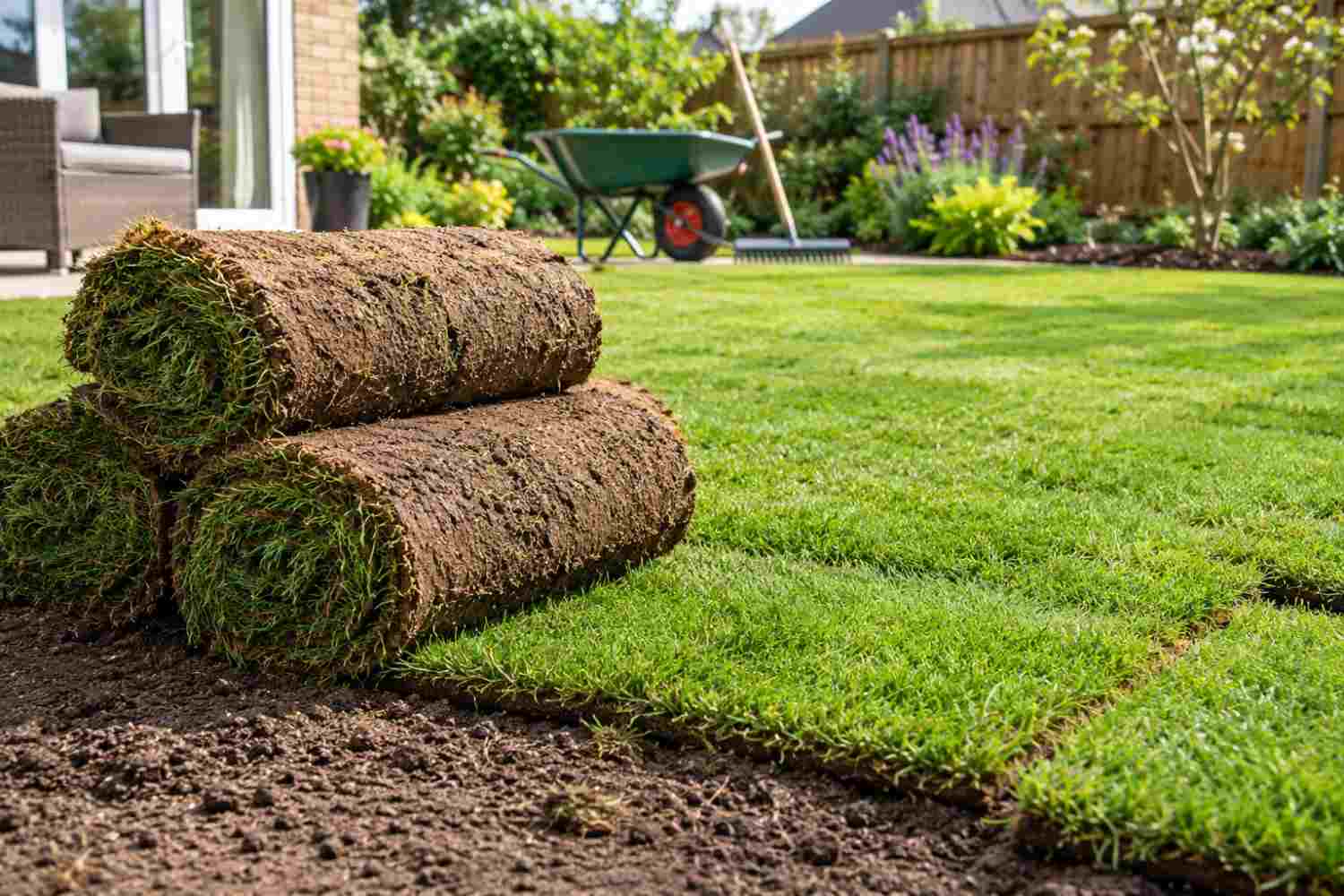
Sod installation, more commonly called turfing in the UK, is the quickest way to turn bare soil into a usable lawn. Rather than waiting weeks for grass seed to germinate and establish, pre-grown turf is cut in rolls, delivered to the property, and laid directly onto prepared ground, giving an almost instant lawn.
The short answer to what sod installation involves is straightforward: preparing the soil properly, laying turf rolls in a staggered pattern so the joints don’t line up, firming them into place, and watering thoroughly for the first few weeks while the roots knit into the soil beneath. Getting each of those stages right matters more than people often expect, since a poorly prepared base or a badly timed delivery can undo even good quality turf.
This guide covers what sod installation actually involves, when it’s worth choosing over seeding, how to prepare the ground properly, the process itself, common mistakes, and when it makes sense to bring in a professional rather than tackling it yourself.
Sod, known in the UK as turf, is grass that’s been grown commercially on specialist turf farms, then cut into rolls or rectangular sections along with a thin layer of soil and root structure. Sod installation, or turfing, is simply the process of laying that pre-grown turf onto prepared ground to create a new lawn, rather than sowing grass seed and waiting for it to grow from scratch.
The main appeal is speed. A seeded lawn typically takes six to eight weeks before it can be walked on, and considerably longer before it looks established. Turf, by contrast, can be walked on lightly within a few weeks and looks like a finished lawn from the day it’s laid, provided the ground beneath it was prepared properly.
Turf isn’t automatically the better choice for every garden, but it suits certain situations particularly well.
Seeding still has its place, particularly for larger areas on a tighter budget, or where a specific grass seed mix is wanted from the outset. But where time, appearance, or reliability matter more than cost, sod installation usually wins out.
Not all turf is grown for the same purpose, and picking the right type matters as much as laying it correctly.
Checking how much sun, shade, and foot traffic a garden actually gets, before ordering turf, avoids ending up with grass that’s a poor match for the space it’s going into.
Turf can technically be laid at almost any time the ground isn’t frozen solid or waterlogged, but autumn and spring give the most reliable results in the UK climate.
Autumn, roughly September through to November, is generally considered the best window. The soil is still warm from summer, which encourages quick rooting, while rainfall is usually reliable enough that watering doesn’t become a constant chore. Spring, from March to May, is the next best option, though a dry spell soon after laying means watering needs closer attention.
Laying turf in the height of summer is possible but riskier, since new turf dries out quickly in hot weather and needs frequent watering to stop it shrinking at the edges. Winter laying is best avoided altogether when the ground is frozen or waterlogged, since turf won’t root into soil that’s either rock hard or saturated.
Ground preparation makes more difference to the end result than the quality of the turf itself. Skipping or rushing this stage is the single biggest reason new lawns fail.
Once the ground is ready, laying the turf itself follows a fairly consistent process.
Turfing a small area is a realistic weekend project for most people, but larger gardens, awkward slopes, poor soil, or a tight deadline often make professional installation the more sensible option.
A professional service typically handles ground preparation properly, from clearing and levelling to improving drainage where needed, sources good quality turf suited to the site, whether that’s a hard-wearing lawn mix or a finer ornamental one, and lays it correctly the first time, which matters since poorly laid turf is genuinely difficult to put right afterwards. Companies offering professional garden and turfing services, such as Ideal Works and Services, work through ground preparation, turf selection, and installation as a complete process rather than leaving a homeowner to work out each stage separately.
For anyone unsure whether their soil, drainage, or timing is right for turfing, getting a professional opinion before ordering turf is generally worth it, since turf that arrives before the ground is ready tends to go to waste.
A handful of mistakes account for most lawns that fail to establish properly after turfing.
The weeks after sod installation matter as much as the laying itself.
Water newly laid turf daily for the first one to two weeks, more often in warm or windy weather, keeping the soil beneath consistently moist rather than letting it dry out between waterings. After that, watering can gradually reduce as the roots establish, usually checked by gently lifting a corner of a turf piece to see whether it’s rooted into the soil below.
Avoid mowing for at least two to three weeks, and when the first cut does happen, set the mower blades high rather than cutting the grass short straight away. Keep foot traffic to a minimum for the first month, and avoid heavy use, such as children’s play equipment or garden furniture, until the lawn feels firmly rooted underfoot.
A few situations make professional help worth considering rather than tackling turfing alone. A large garden, a sloped or uneven site, heavy clay soil that’s difficult to work by hand, or persistent drainage problems that need addressing before turf goes down are all good reasons to get an opinion first.
Timing matters too. Turf doesn’t keep well once it’s been cut, so a professional installer coordinating delivery with ground preparation avoids turf arriving before the site is ready, or sitting around losing quality while preparation catches up. Where the budget allows, this coordination alone often justifies bringing someone in, even for homeowners who are otherwise comfortable with garden work.
Sod installation offers a fast route to a finished-looking lawn, but the result depends almost entirely on what happens before the turf arrives: proper ground preparation, sensible timing, and careful laying. Skimp on any of those and even good quality turf can struggle to establish.
For a small, straightforward area, turfing it yourself over a weekend is entirely realistic. For larger or more complicated gardens, getting the ground assessed and prepared properly first, whether DIY or with professional help, is what makes the difference between a lawn that thrives and one that needs redoing within a year.
Quick Answer: What Is Sod Installation?
Sod installation, known in the UK as turfing, means laying pre-grown turf onto properly prepared soil to create an instant lawn. It involves clearing and levelling the ground, laying turf rolls in a staggered pattern, firming them in, and watering thoroughly for several weeks while the roots establish into the soil beneath.
What is sod installation?
Sod installation, called turfing in the UK, is the process of laying pre-grown grass, supplied in rolls, directly onto prepared soil to create an instant lawn. It’s an alternative to sowing grass seed, giving a finished-looking lawn within days rather than the weeks seeding typically takes to establish.
How long does it take for sod to root?
Turf typically starts rooting into the soil beneath within two to three weeks, provided it’s watered consistently and the ground was prepared properly beforehand. You can check by gently lifting a corner of a turf piece; resistance means it’s taking root. Full establishment, strong enough for regular use, usually takes around six weeks.
When is the best time to lay turf in the UK?
Autumn and spring are generally the best times, when the soil is workable and rainfall is usually reliable enough to reduce how much watering is needed. Summer laying is possible but needs closer attention to watering, while winter should be avoided when the ground is frozen or waterlogged.
Can I lay sod on top of an old lawn?
No, existing grass, weeds, and roots should be removed before turfing rather than laying new turf over an old lawn. Turf needs direct contact with properly prepared soil to root successfully, and laying it over existing vegetation or thatch prevents that contact and usually leads to patchy, poor results.
Do I need to water newly laid turf every day?
Yes, for the first one to two weeks, especially in warm or windy weather, since newly laid turf dries out quickly before its roots have reached the soil below. Watering can be gradually reduced as the turf establishes, generally once it resists a gentle tug after two to three weeks.